13 Easy Garden Path Ideas That Make Any Backyard Look More Finished Fast
Your backyard deserves a path that says “I planned this,” not “I got lost.” These simple ideas add polish, guide guests, and make your plants look intentional. Most use affordable materials and a free afternoon. Ready to create a walkway that looks custom without the custom price?
1. Gravel Ribbon Paths That Crunch Just Right
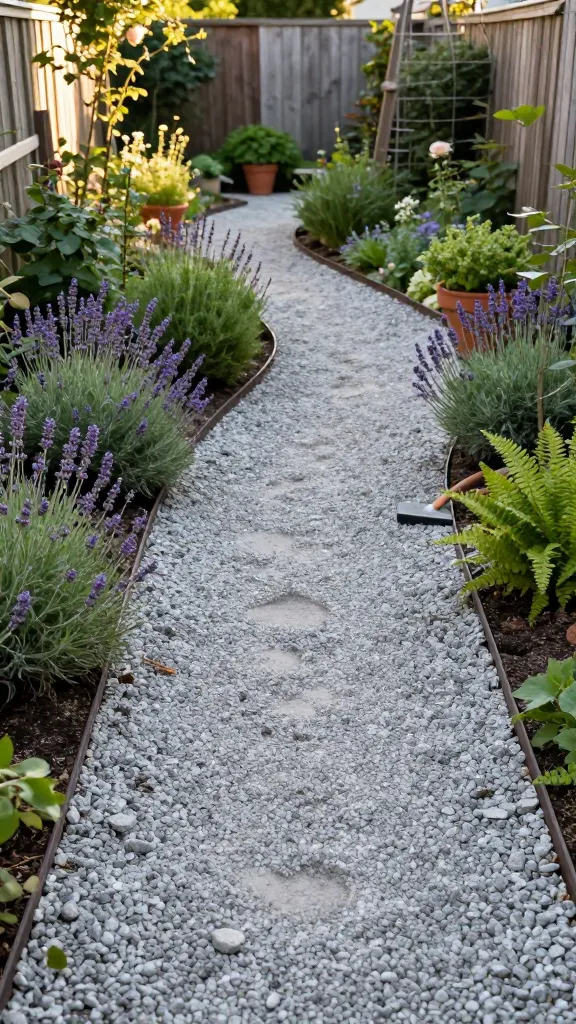
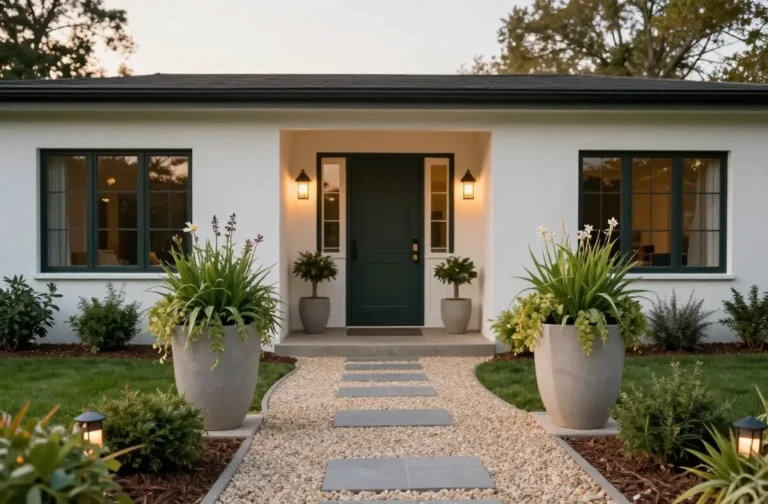
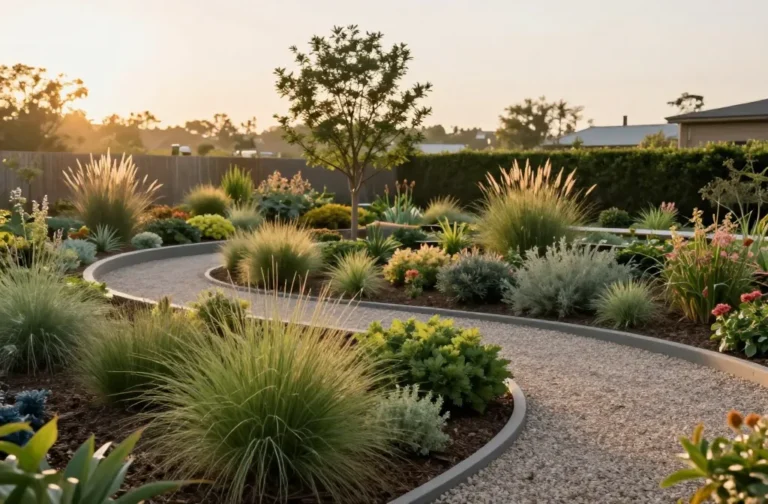
Gravel gives you that satisfying crunch and a classic cottage vibe. It’s affordable, drains well, and fits almost any garden style. Plus, you can install it in a weekend without renting heavy equipment.
Materials
- Landscape fabric
- Edging (metal, plastic, or stone)
- Crushed gravel or pea gravel
- Stakes and a tamper
Lay fabric to stop weeds, set edging, and fill with 2–3 inches of gravel. Use a tamper so it doesn’t shift underfoot. Great for informal gardens where you want a soft, natural line and easy maintenance.
2. Stepping Stones Through Groundcover
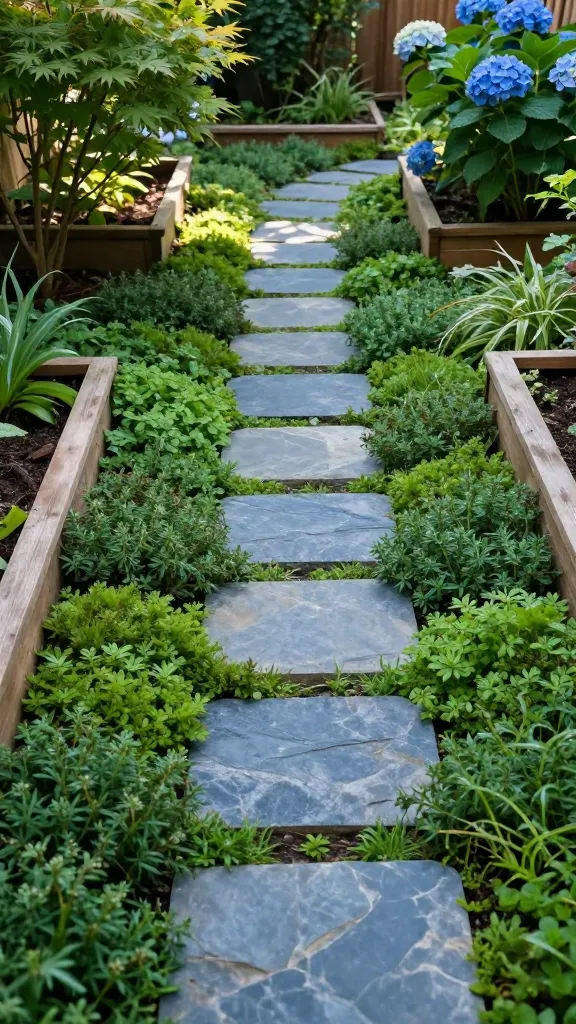
Flat stones tucked into low groundcover look lush and intentional. You get a defined route without paving the entire area. It’s also pet- and kid-friendly because the plants cushion everything.
Tips
- Choose dense, low growers like thyme, mazus, or Irish moss.
- Set stones level with soil so you don’t catch a toe.
- Space 18–24 inches for a natural stride.
This shines in shady corners or between raised beds. The mix of stone and green reads as high-end with minimal effort—seriously.
3. Brick-On-Sand for Old-World Charm
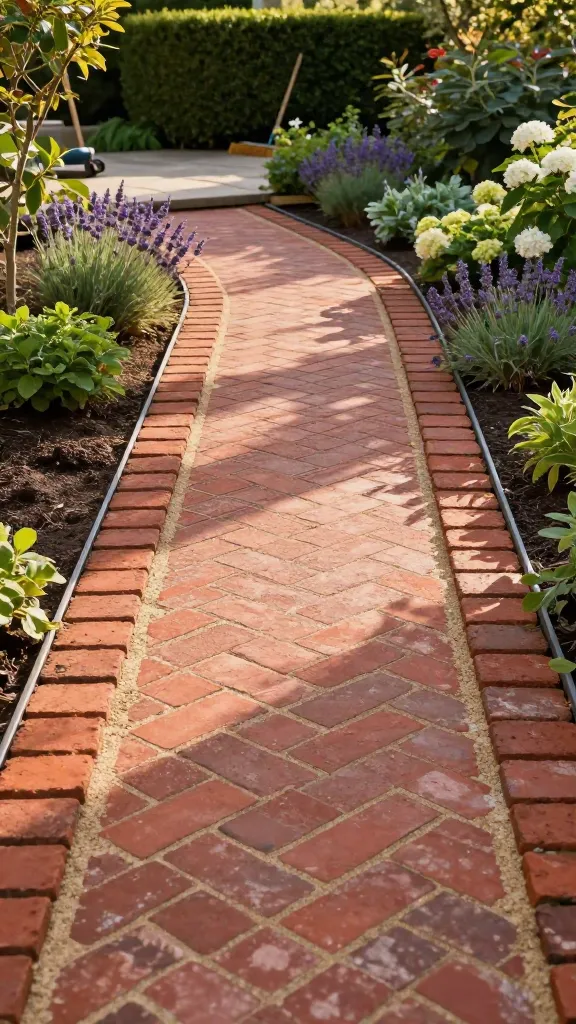
Bricks feel timeless and tidy, and you don’t need mortar to get a finished look. Lay them on compacted sand, sweep in polymeric sand, and boom—instant storybook path.
Key Points
- Choose a pattern: herringbone for strength, running bond for simplicity.
- Compact the base well to avoid future wobble.
- Edge with steel or soldier-course bricks to lock it in.
Use it when you want structure near a patio or formal beds. It pairs perfectly with clipped hedges and neat borders.
4. Paver Steppers With Decorative Gaps
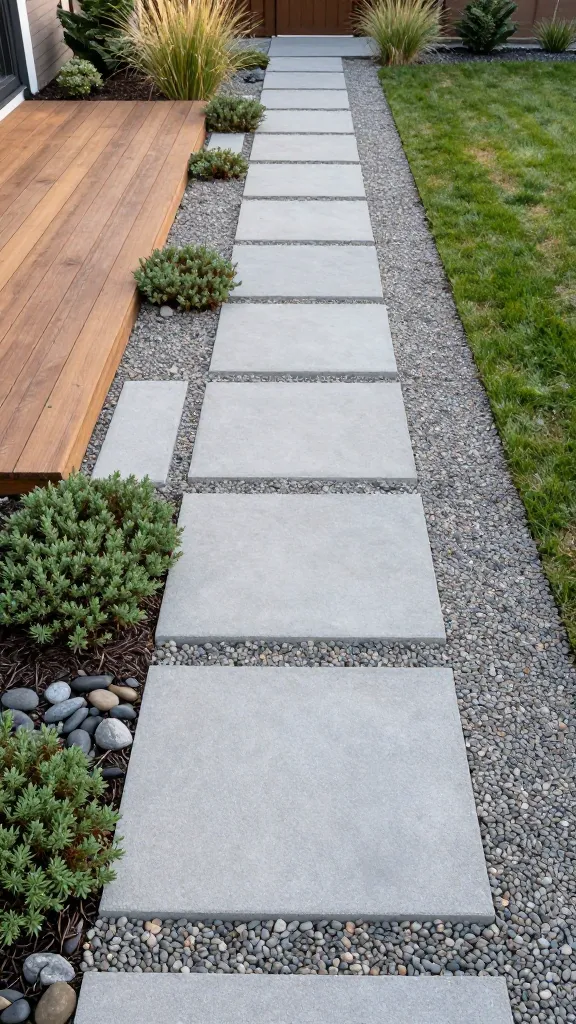
Large concrete pavers spaced with gaps look modern and airy. Fill the gaps with gravel, river rock, or hardy herbs for texture. It gives you a designer look without a designer bill.
Materials
- 24×24 or 18×18 concrete pavers
- Base gravel and leveling sand
- Gap fill: pea gravel, river rock, or creeping thyme
Set pavers on a compacted base, keep them level, and be consistent with spacing. Ideal for contemporary yards and areas that transition from deck to lawn. FYI, the negative space makes small yards feel larger.
5. Mulch Meanders for Fast Wins
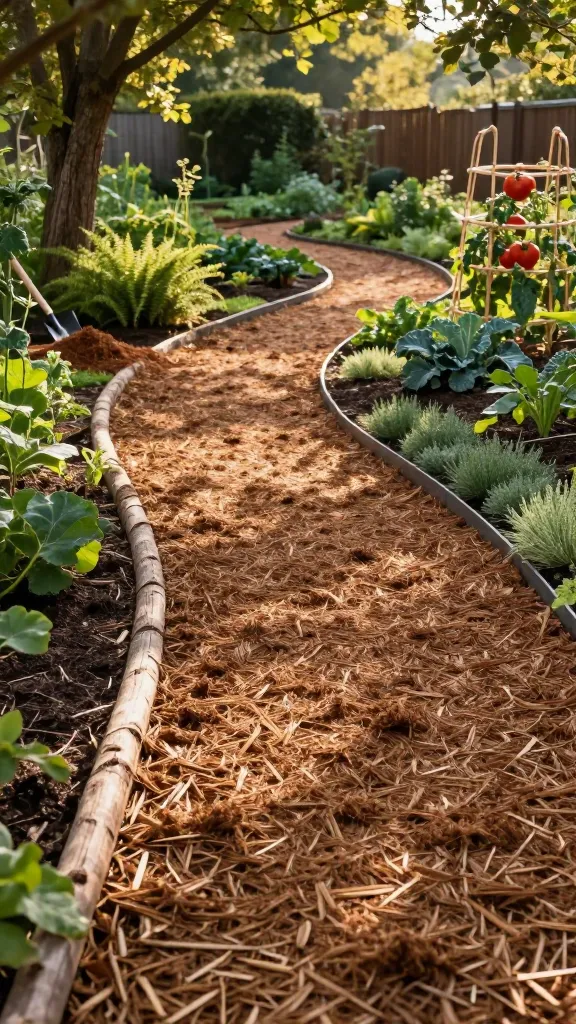
Need a path today? Mulch delivers. It’s cheap, soft underfoot, and super forgiving when you want to curve around trees or beds.
Tips
- Use cedar or hardwood mulch for longevity.
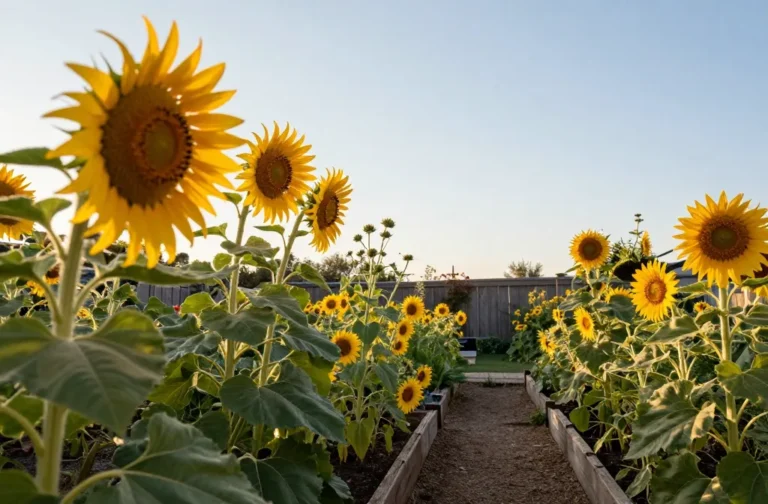
- Define edges with logs, steel strips, or low plants so it doesn’t wander.
- Top up annually for fresh color and weed control.
Perfect for woodland or vegetable gardens. It looks intentional immediately and smells amazing—bonus.
6. Flagstone With Mossy Joints
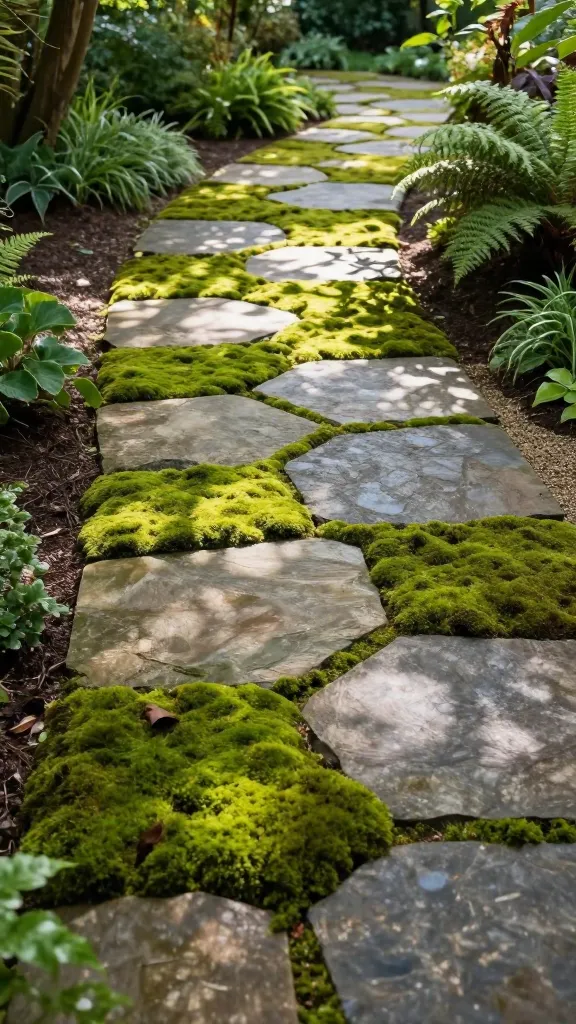
Flagstone screams “I hired a landscape architect,” even if you didn’t. The irregular shapes create a custom feel, and moss or creeping plants in the joints add softness.
Materials
- Flagstone slabs (varied thickness)
- Decomposed granite or sand base
- Joint filler: soil mix, moss, or polymeric sand
Dry-lay pieces like a puzzle and aim for tight joints. In shady, moist spots, plant moss between stones for that fairytale vibe. Use this where you want a premium look with organic edges.
7. Rustic Log Slice Steppers
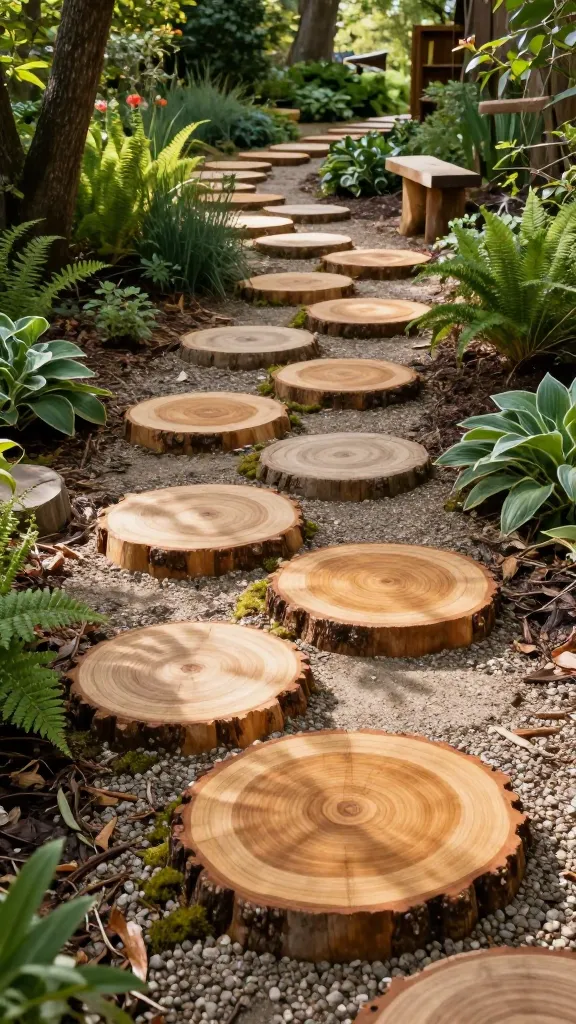
Turn felled trees into charming path slices. Wood rounds bring warmth and a playful, storybook feel to informal spaces. They also make the most of materials you might already have—IMO, that’s a win.
Tips
- Use rot-resistant species like cedar or locust.
- Seal with exterior wood preservative to extend life.
- Set in sand or fine gravel for drainage.
Best in low-traffic areas or as accent stepping stones. They shine in woodland gardens and near play areas.
8. Decomposed Granite (DG) for Sleek, Solid Paths
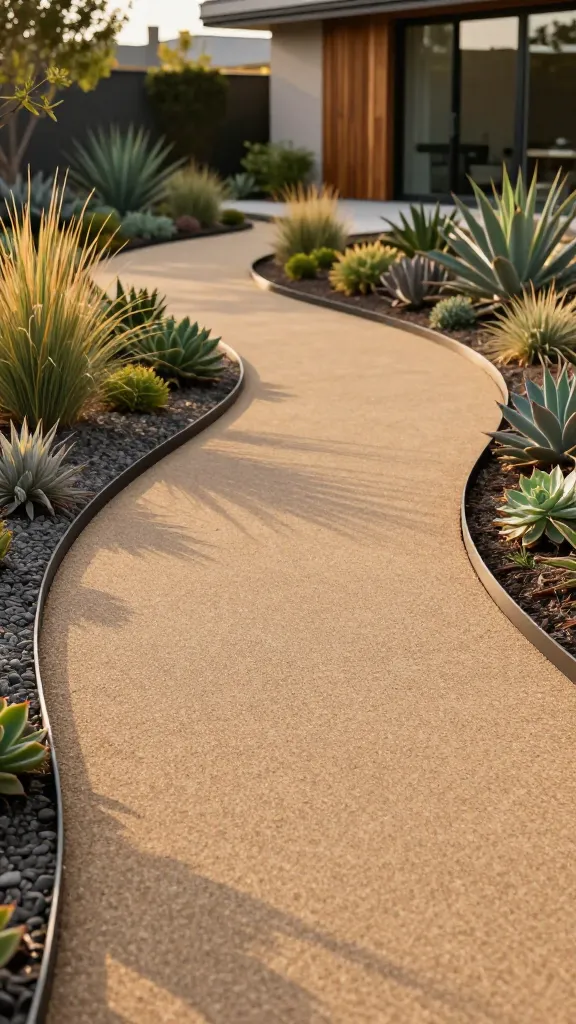
DG compacts into a firm, matte surface that reads clean and modern. It drains well, it’s wheelchair- and stroller-friendly, and it costs less than solid paving.
Key Points
- Install in 2–3 inch layers and compact each pass.
- Use a stabilizer additive for extra firmness.
- Always include edging to hold the shape.
Choose DG when you want a smooth, minimal look that suits xeriscapes and contemporary gardens. It’s the quiet luxury of path materials.
9. Brick Edging With Grass or Clover Infill
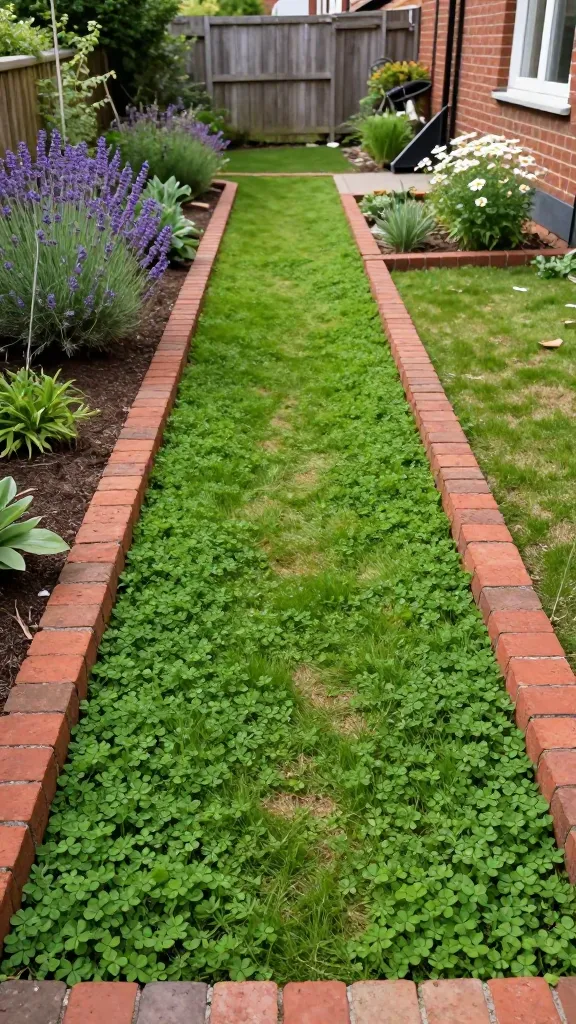
Define a green walkway with classic brick edges. The neat lines make even a humble lawn path look designed. Plant microclover or drought-tolerant turf to cut watering needs.
Materials
- Bricks for edges (laid flat or soldier style)
- Soil amendments and seed or sod
- String line for straight runs
Install the brick first, then grade and seed inside. Great for cottage or traditional homes where you want a soft center and crisp borders. It turns mowing into tracing a runway.
10. Pebble Mosaic Accents That Wow
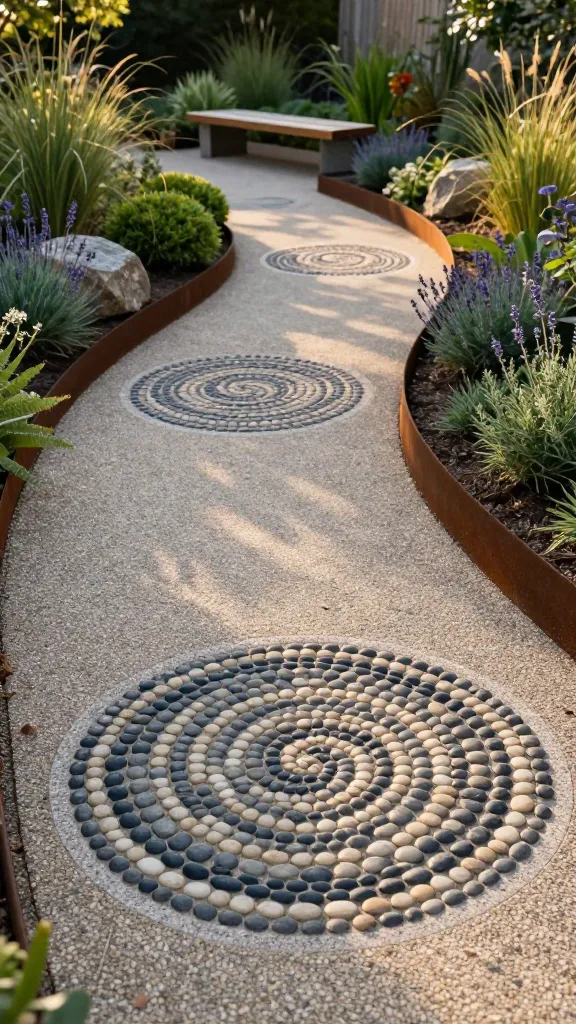
Want a little drama without paving the entire yard? Add circular pebble mosaics at key spots: the start of the path, a turn, or a seating node. They function like jewelry for your garden.
Tips
- Sort pebbles by color and size for patterns.
- Set in mortar or use a mosaic mat for easier install.
- Seal to enhance color and protect from staining.
Use sparingly as focal points within simpler materials like gravel or DG. Visitors will assume you hired an artist—don’t correct them.
11. Boardwalk-Style Paths Over Damp Spots
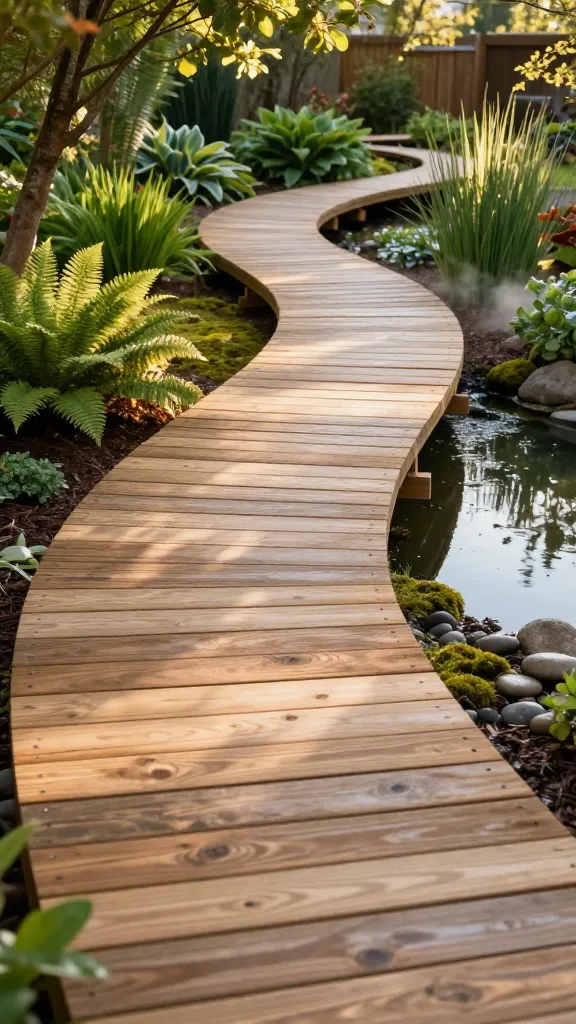
Got soggy soil or a dip that never dries? A simple boardwalk solves it with style. It lifts you above the mess and creates the coolest “secret trail” vibe.
Materials
- Pressure-treated or composite decking
- Ground-contact posts or sleepers
- Exterior screws and joist hangers
Keep slats spaced for drainage and ventilation. Ideal through ferns, rain gardens, or along ponds. It turns problem areas into the most interesting part of your yard—trust me.
12. Recycled Brick and Broken Paver Patchwork
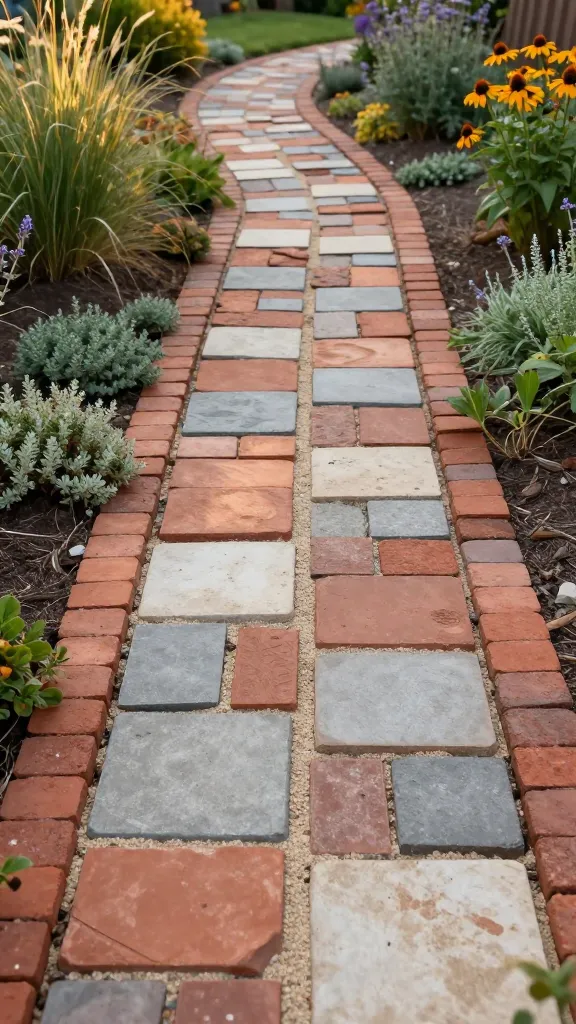
Mix salvaged brick, leftover pavers, and even old tiles to create a boho patchwork path. It’s budget-friendly, sustainable, and looks like you spent months scouting materials.
Key Points
- Keep pieces level and consistent in thickness.
- Use a sand or DG base for easy adjustments.
- Limit your color palette so it feels cohesive.
Perfect for eclectic gardens and creative souls. It makes your path a conversation piece, not just a shortcut.
13. Solar Glow-Up: Light the Edges
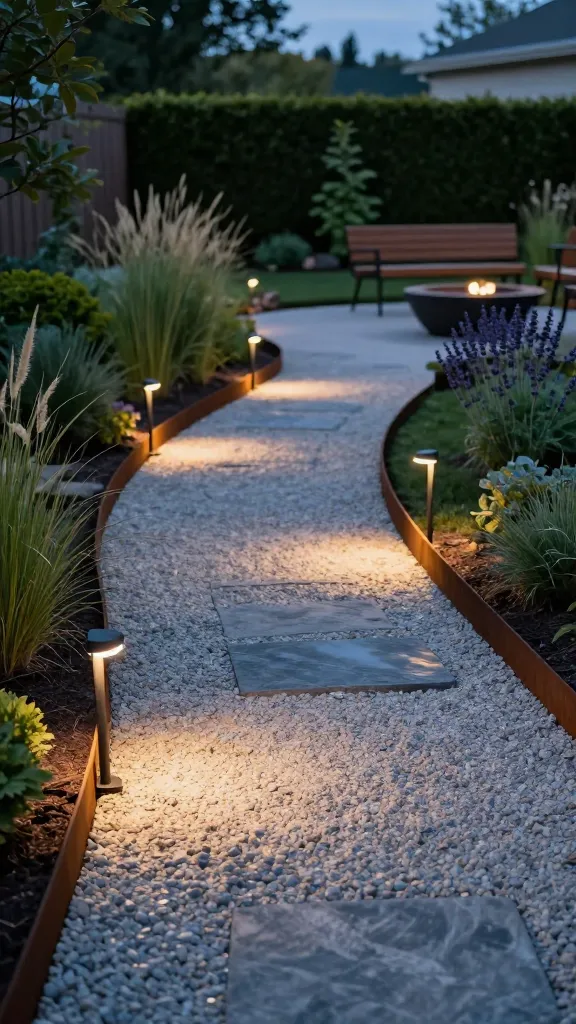
Lighting changes everything at dusk. Add solar stakes, low-voltage LEDs, or strip lights under edging to outline the path and boost safety. It turns your garden into an evening hangout spot fast.
Options
- Solar stake lights for easy install
- Low-voltage LED bollards for durability
- Rope or strip lights tucked under steel edging
Place lights on alternating sides to avoid runway vibes. Use warm white (2700–3000K) for a cozy feel. This works with any path material and makes your landscaping look professionally finished.
Pick one idea, two if you’re feeling bold, and map it with a hose to test the route. Then set a weekend, grab your materials, and make that path happen. Your backyard will look polished, intentional, and ready for strolls with coffee—or a glass of something sparkly.