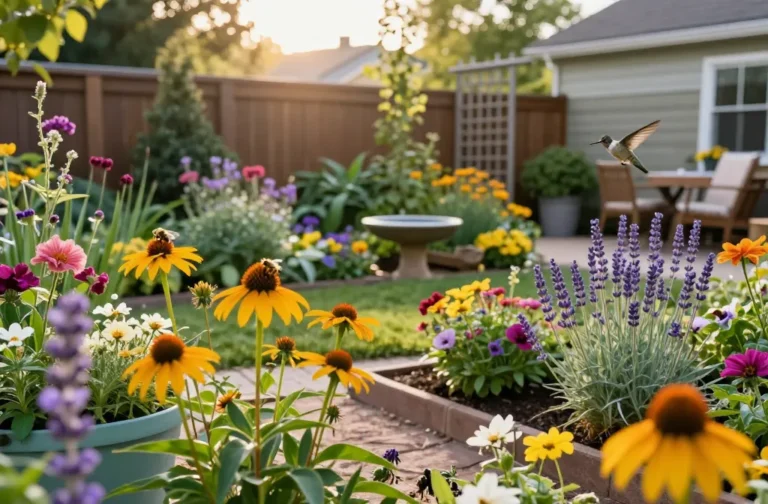
12 Easy Garden Edging Ideas to Make Flower Beds Look Neat Now
Want your flower beds to look crisp, curated, and a little bit fancy without hiring a landscaper? You’re in the right place. These easy garden edging ideas corral messy mulch, stop grass creep, and give your yard instant polish. Pick one, grab a weekend, and boom—neat beds, happy you.
We’ll cover classic looks, budget hacks, and low-maintenance wins. Ready to edge like you mean it?
1. Brick-On-Edge Borders For Classic Charm
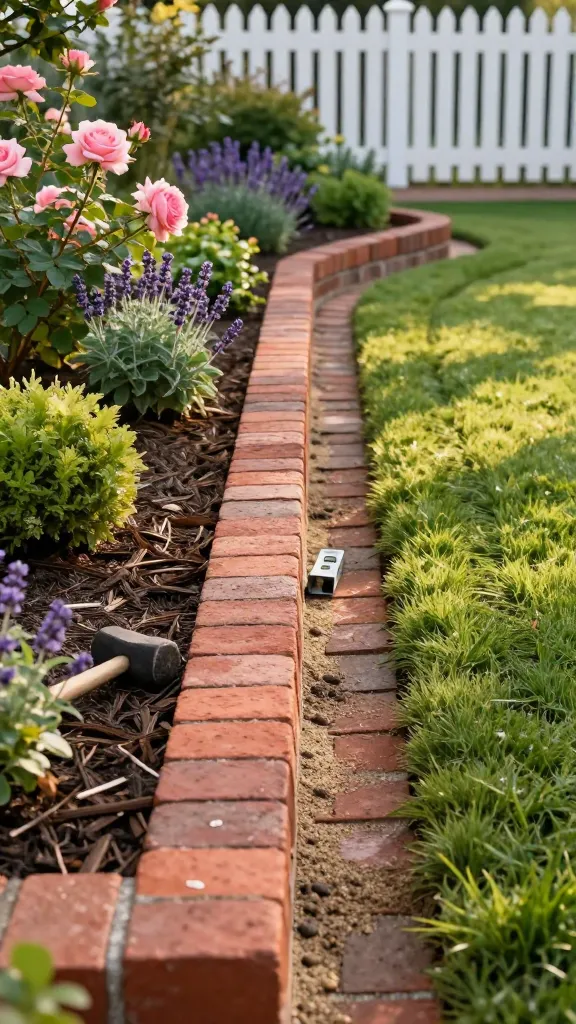
Nothing beats bricks stood on edge for a tidy, traditional look. They lock in mulch, hold a line, and feel timeless next to cottage flowers or structured shrubs.
Tips
- Dig a shallow trench the width of your brick.
- Lay a compacted sand base for stability.
- Set bricks on edge, tap level, and backfill with soil.
Use this when you want durability and a neat, old-world vibe that never dates. It also handles mower wheels like a champ.
2. Steel Strip Edging For A Sleek, Modern Line
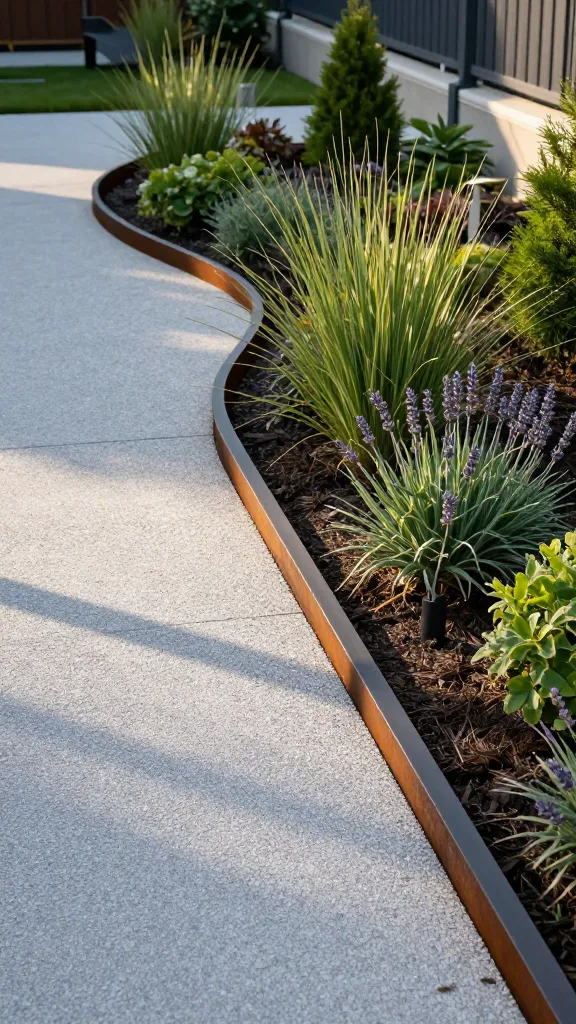
Want razor-sharp borders that scream minimal? Go with powder-coated steel or corten steel strips. They bend into curves, resist heaving, and deliver that crisp designer finish.
Key Points
- Choose 4–6 inch depth for better root and mulch control.
- Anchor with included stakes every 2–3 feet.
- Consider corten for a warm, rusted patina over time.
Perfect for contemporary beds, gravel walkways, and anyone who loves tidy lines without fuss. FYI: it’s pricier but worth it, IMO.
3. Natural Stone Stacking For Organic Texture
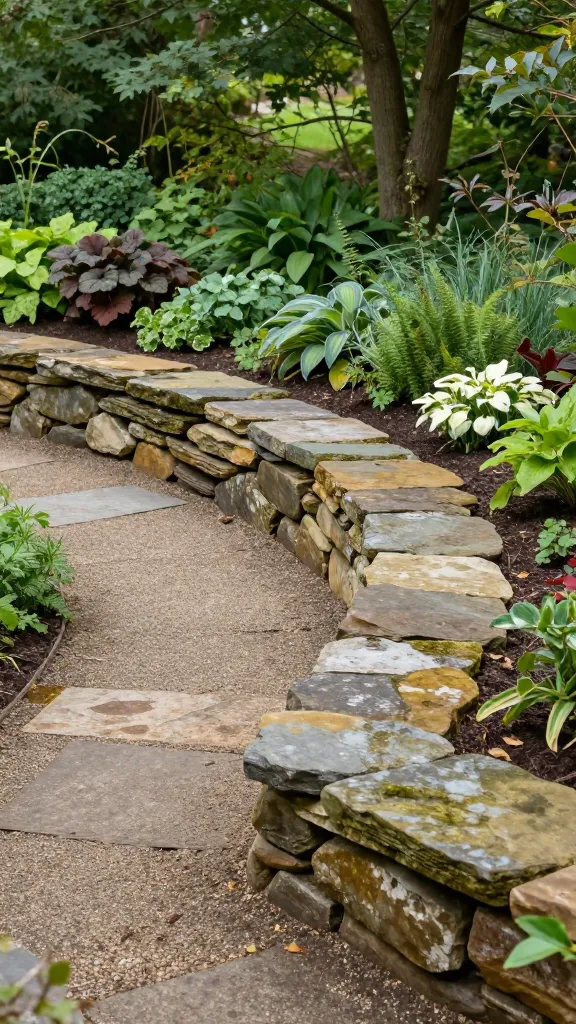
Stacked fieldstone or flagstone adds texture and looks like the bed grew there naturally. No mortar needed for low walls—just stack and shim until it’s stable.
Materials
- Flat stones (flagstone, slate, or fieldstone)
- Gravel for a compacted base
- Landscape fabric to reduce weeds
This shines in informal gardens, woodland edges, and around shade beds. It blends seamlessly and ages beautifully, like good cheese and comfy jeans.
4. Paver Soldier Course For A Neat, Mow-Friendly Edge
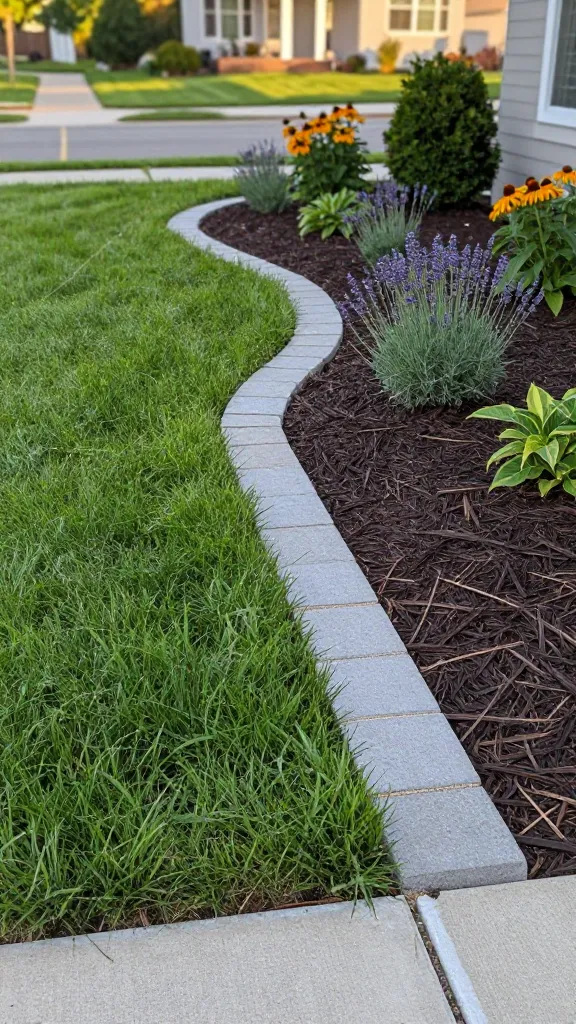
Laying concrete pavers in a “soldier course” (end-to-end) creates a manicured border you can mow right over. It locks in shape and keeps mulch where it belongs.
Tips
- Set pavers slightly above lawn height for a clean cut line.
- Use polymeric sand in joints to keep weeds out.
- Curves? Choose smaller pavers for tighter arcs.
Great for front yards where curb appeal matters and you want maintenance on autopilot. Seriously, it’s the suburban glow-up.
5. Flexible Plastic Or Rubber Edging For Easy Curves
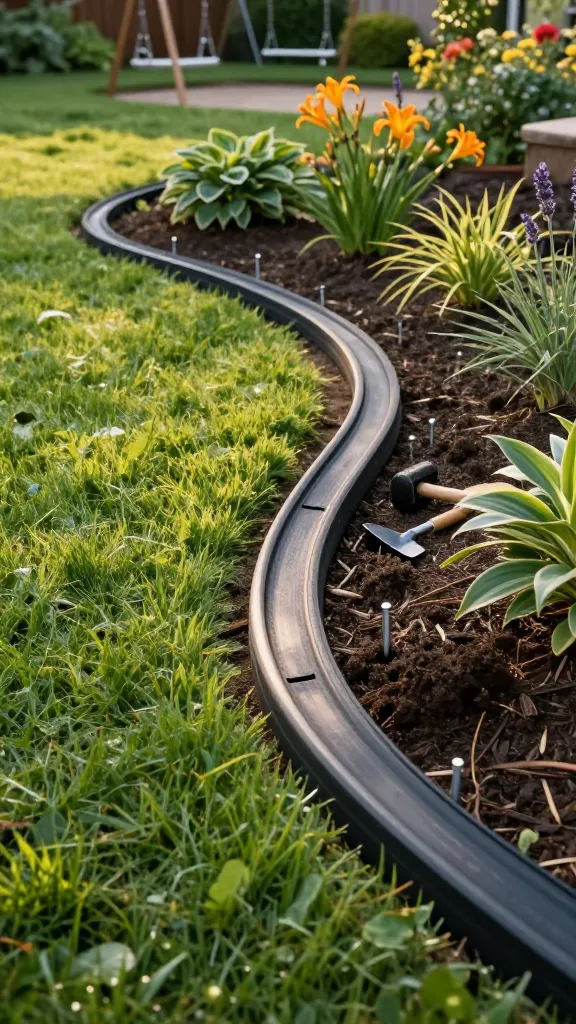
On a budget? Flexible edging snaps into smooth curves and installs fast. Modern rubber blends made from recycled tires look better and last longer than you’d think.
Key Points
- Warm the edging in the sun to bend more easily.
- Stake every 2 feet and at all direction changes.
- Bury the lip slightly to conceal the top edge.
Use this when you want speedy results, especially around wavy beds or kid-friendly play areas. Not forever-fancy, but super practical.
6. Gravel Trench Edging For Low-Maintenance Drainage
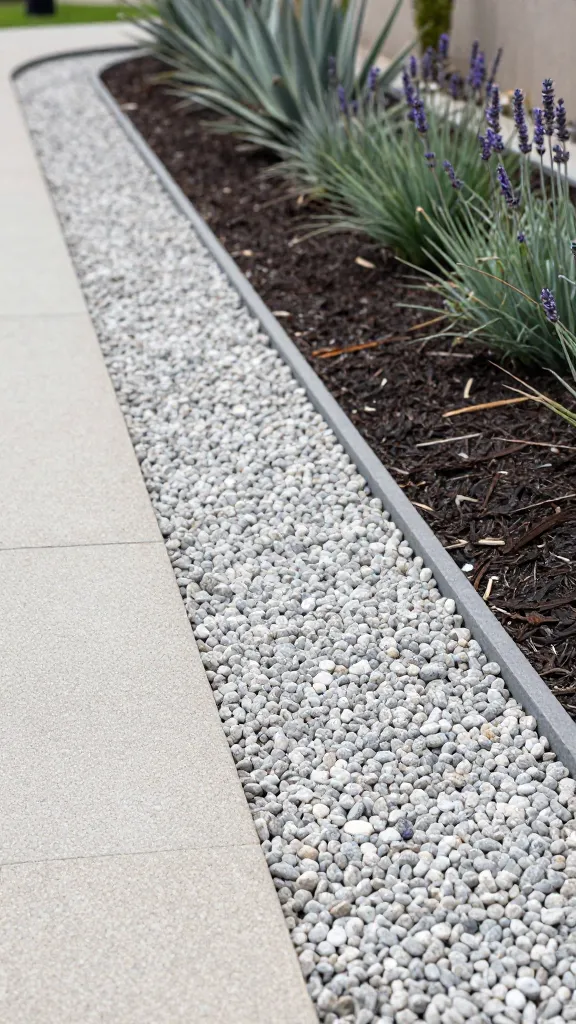
A clean trench filled with pea gravel or crushed stone forms a subtle, functional boundary. It drains well and looks intentionally minimal.
How-To
- Excavate a 6–8 inch wide trench along the bed line.
- Line with landscape fabric to deter weeds.
- Fill with 2–3 inches of compacted base and a top layer of decorative gravel.
Perfect for modern or xeriscape gardens, and anywhere you want a breathable edge that shrugs off rainstorms.
7. Reclaimed Timber Rails For Rustic Cottage Vibes
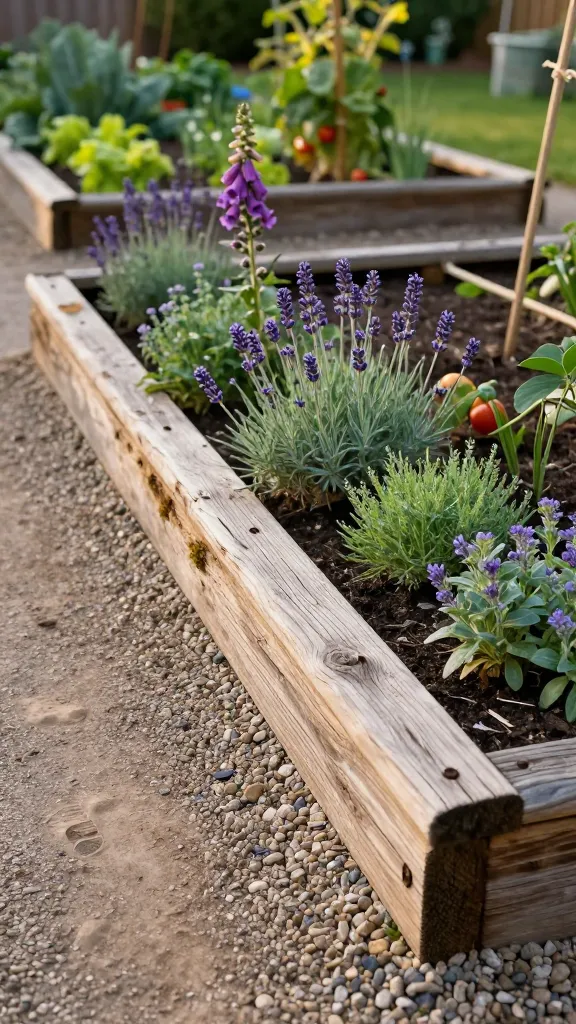
Reclaimed sleepers, landscape timbers, or old barn beams deliver texture and warmth. They frame beds beautifully and say “I’m laid-back but I have taste.”
Tips
- Choose untreated or rot-resistant wood (cedar, black locust) where possible.
- Set on a compacted gravel base to reduce rot.
- Stake or rebar-pin through predrilled holes for stability.
Use for veggie beds, cottage borders, or along pathways. It’s budget-friendly and easy to refresh when you redo plantings.
8. Living Edges With Low Boxwood Or Thyme
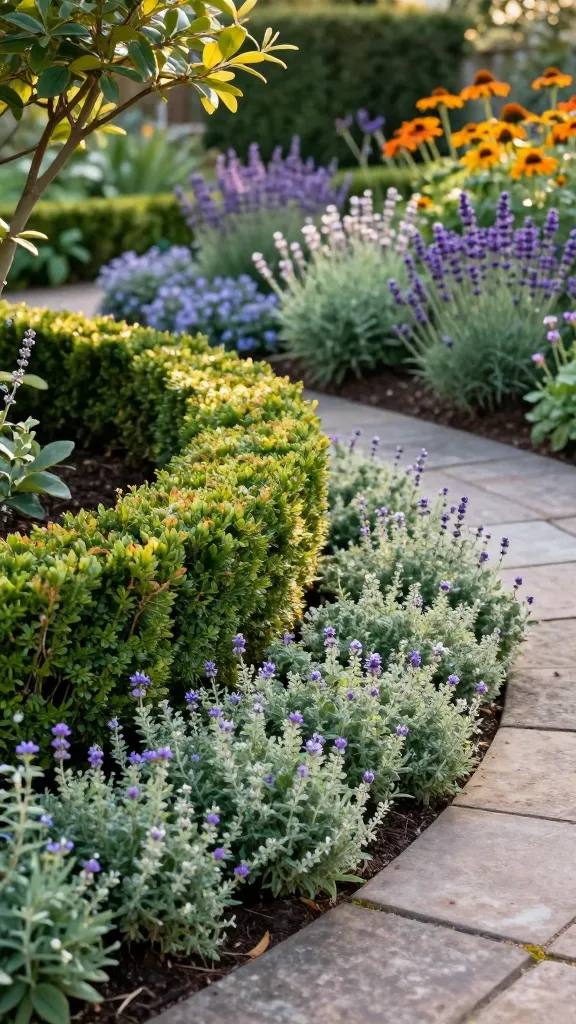
Why not let plants be the border? Low-growing hedges like boxwood or fragrant creeping thyme create a living frame that softens hard lines.
Plant Picks
- Boxwood ‘Green Velvet’ for formal 8–12 inch hedges
- Thyme for sunny, dry edges with bee-friendly blooms
- Liriope for a tidy grass-like edge in partial shade
Choose this when you want softness and seasonal interest. It takes patience to fill in, but the payoff feels luxe.
9. Gabion Mini-Walls For Industrial-Cool Texture
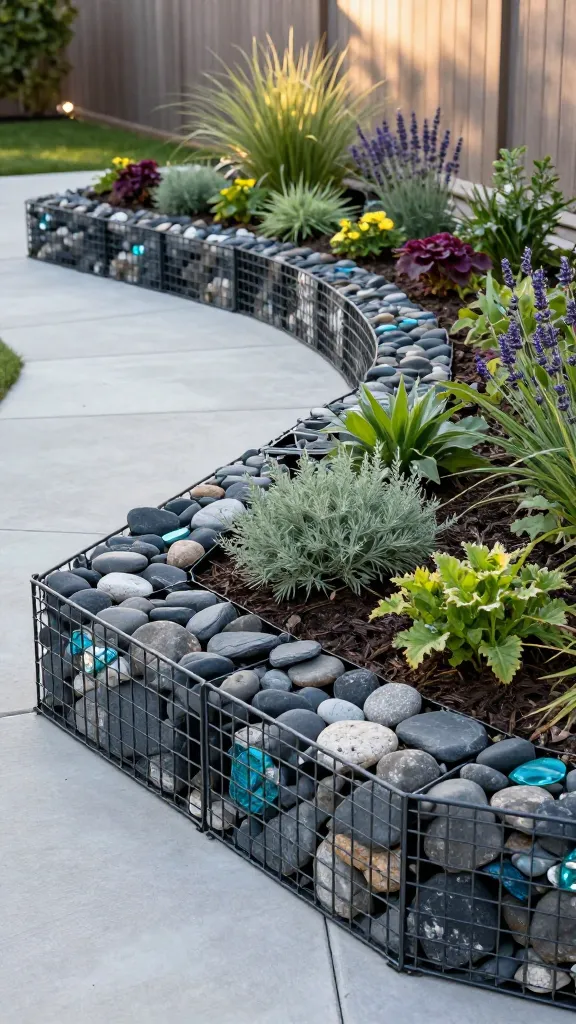
Gabion baskets filled with stone or recycled glass add weight and instant edge drama. They’re tough, modular, and surprisingly DIY-friendly.
Materials
- Pre-made gabion cages (6–12 inches tall for edging)
- Fill rocks or mixed materials (river rock, slate, even seashells)
- Landscape fabric to prevent soil migration
Use in modern gardens or to terrace slight slopes. It doubles as erosion control and a conversation starter. Trust me, neighbors will ask.
10. Terra-Cotta Pot Slices For Whimsical Curves
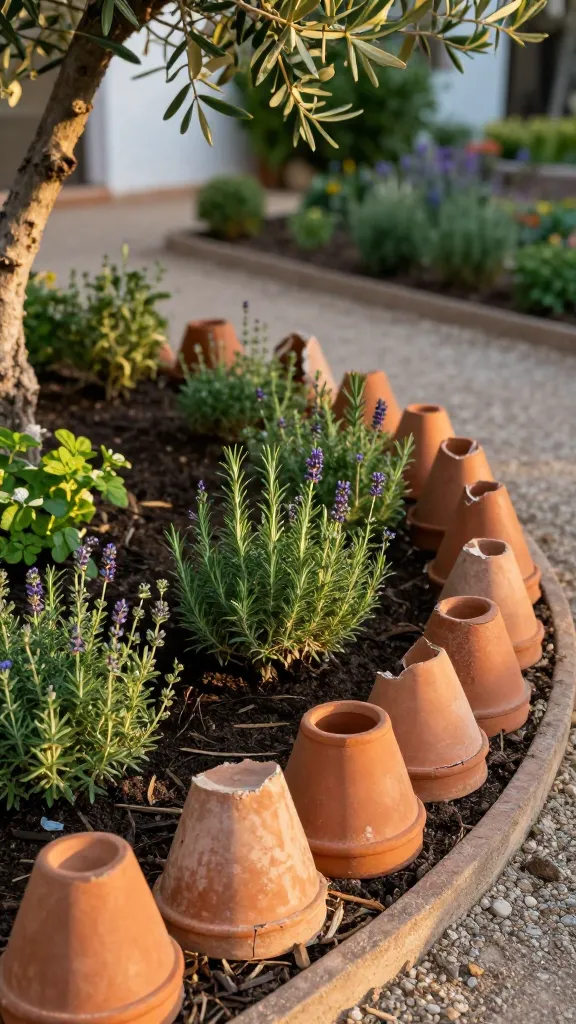
Break or cut terra-cotta pots into halves or thirds and stand them upright for a playful border. The warm color pops against green and mulch.
Tips
- Score and tap to split pots more cleanly.
- Bury the bottom third for stability.
- Mix heights for a scalloped look or keep uniform for a tidy line.
Ideal for small beds, herb gardens, and Mediterranean-style plantings. Low cost, big charm, and easy to rearrange.
11. Bottle Or Brick Mosaic For Artsy Upcycling
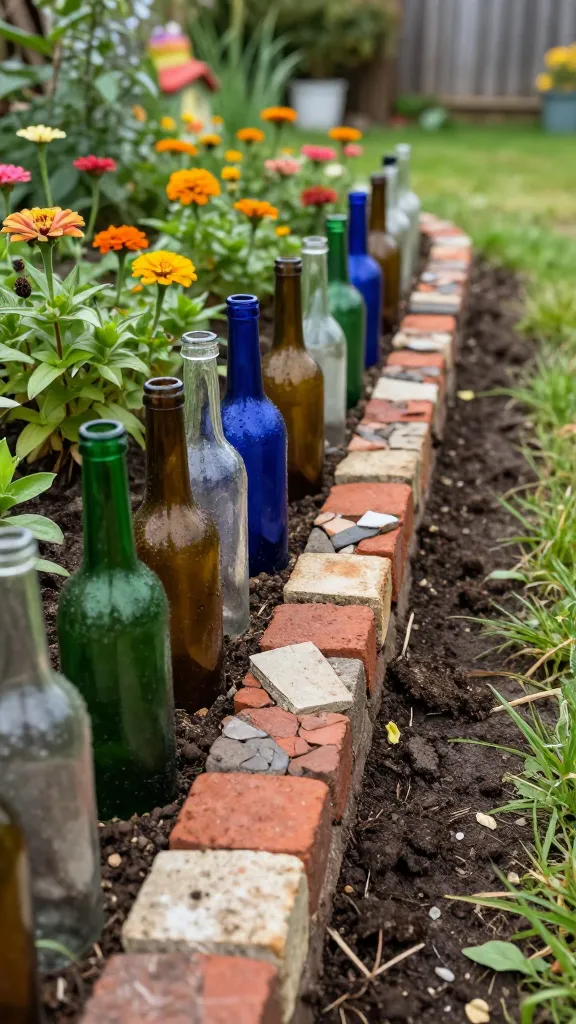
Turn your recycling into edging with glass bottles or mixed brick shards set neck-down in a row. It’s colorful, personal, and basically garden jewelry.
How-To
- Dig a narrow trench 4–6 inches deep.
- Press bottles/tiles in tightly and backfill to secure.
- Alternate colors or sizes for rhythm and pattern.
Best in quirky, creative spaces or kid-friendly gardens. Bonus: it’s budget-friendly and totally custom.
12. Invisible Edging: Spade-Cut And Mulch For Ultra-Clean Lines
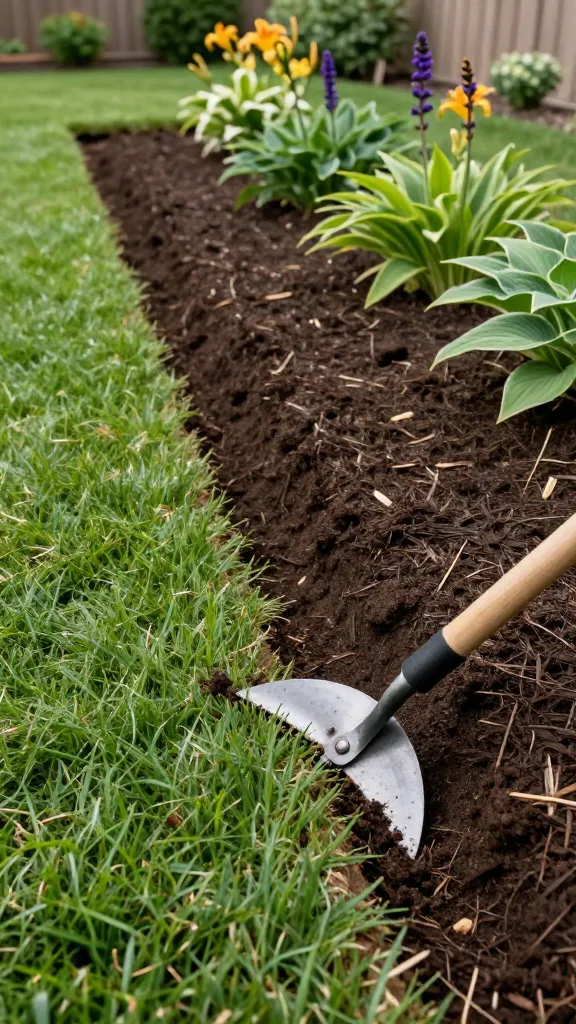
Sometimes the best edge is the one you barely see. A spade-cut trench with a slight bevel and a deep mulch layer looks clean and costs next to nothing.
Key Points
- Cut a 4–6 inch deep V-shaped trench along your layout line.
- Mulch to the edge and re-cut once or twice each season.
- Use a half-moon edger for smooth, repeatable arcs.
Use this when you want speed, simplicity, and a pro look without materials. Maintenance matters, but the payoff is super crisp.
Quick Planning Guide
- Budget-Friendly: Spade-cut, plastic edging, terra-cotta slices, bottle mosaic
- Low Maintenance: Steel strips, paver soldier course, gravel trench
- Natural Look: Stacked stone, timber rails, living edges
- Modern Vibe: Steel, gabions, gravel trench
Ready to pick a favorite and make those beds look intentional? Start small—edge one bed this weekend and watch the whole yard feel upgraded. A clean border makes even humble plants look curated, and you’ll love how tidy everything stays after the next mow.
You’ve got this. Grab a shovel, cue a playlist, and give your garden the glow-up it deserves.