Genius 12 Shade Garden Ideas That Turn Dark Corners Into Beautiful Spaces
Got a gloomy spot that refuses to glow? Perfect—shade gardens can look insanely lush and elegant with way less watering and weeding. These ideas turn those “meh” corners into secret hideaways, vibrant plant tapestries, and low-key magical nooks. Ready to make your neighbors wonder what sorcery you used?
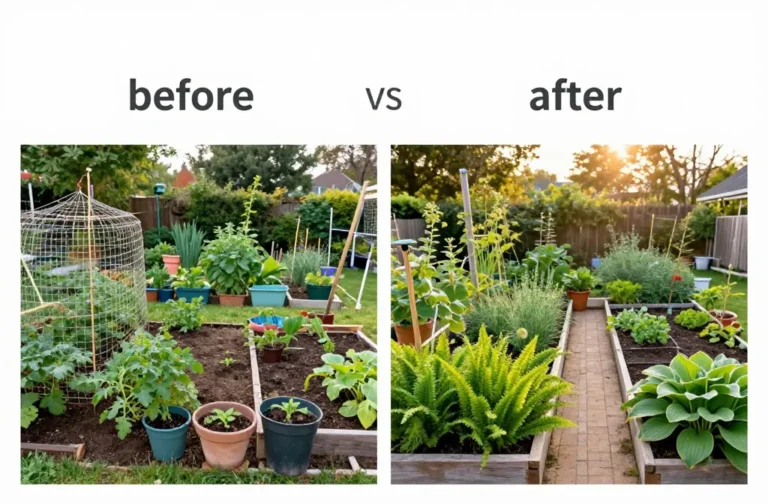
1. Paint With Foliage Contrasts
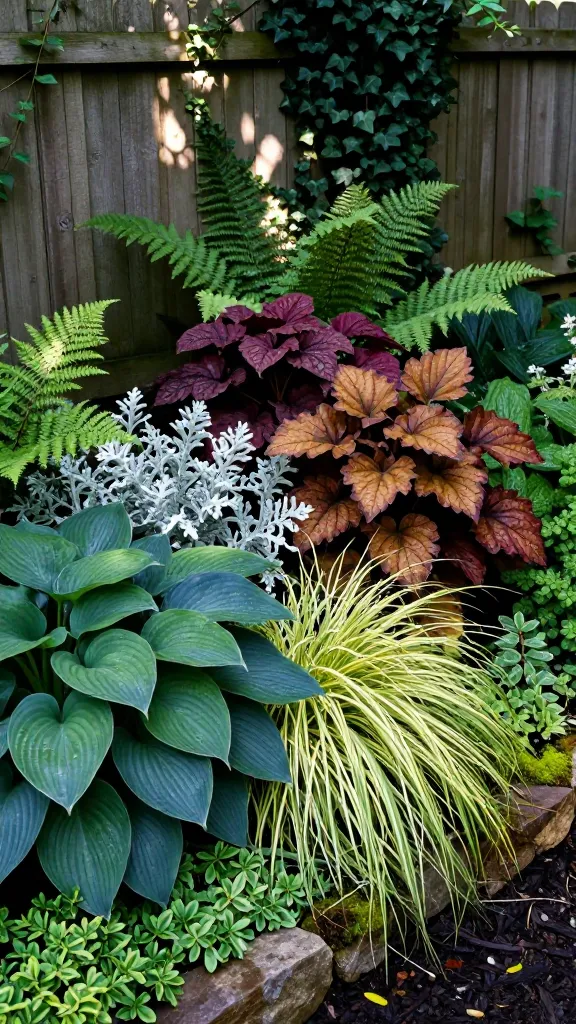
Flowers get all the hype, but shade gardens win with foliage. Contrast leaf shapes, sizes, and colors to make the space pop even on cloudy days.
Key Moves:
- Pair bold, broad leaves (hosta) with fine, airy fronds (fern).
- Mix dark greens with chartreuse, silver, and variegated patterns.
- Layer heights so the eye travels: groundcovers, mid-heights, statement plants.
Plants like hosta, Japanese forest grass (Hakonechloa), heuchera, and brunnera do the heavy lifting. You’ll get depth, drama, and that “I totally meant to do that” designer look.
Best for: Low-light beds where blooms struggle but leaves can shine year-round.
2. Build a Woodland Path You’ll Actually Stroll
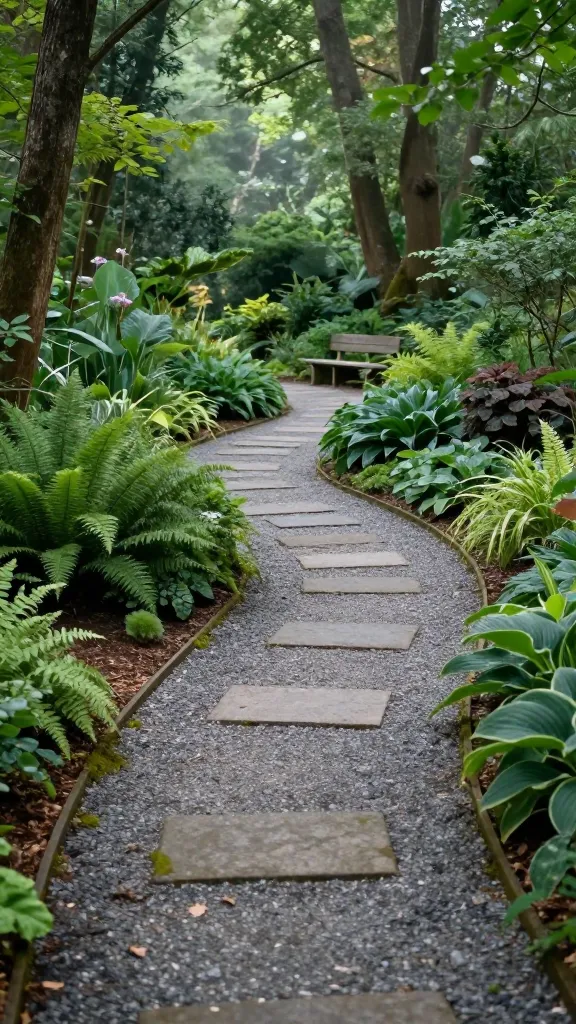
A meandering path makes a shady area feel intentional, not forgotten. It guides feet and eyes, and you’ll finally enjoy that corner instead of ignoring it.
Materials That Work:
- Crushed gravel or decomposed granite for easy drainage
- Stepping stones with moss peeking through
- Wood chips for a soft, foresty vibe
Curve the path gently and tuck plants along the edges for a natural flow. Add a simple bench halfway—instant destination, instant charm.
Best for: Deep shade or mixed shade areas that need structure and a reason to wander.
3. Stack the Shade: Multi-Layer Planting

If your garden sits under trees, lean in. Layer canopy, understory, shrubs, fillers, and groundcovers so the space feels like a mini forest.
Simple Formula:
- Canopy: Japanese maple or dogwood
- Understory: serviceberry or witch hazel
- Shrubs: hydrangea, azalea, pieris
- Perennials: hellebores, astilbe, toad lily
- Groundcovers: pachysandra, wild ginger, lamium
This structure creates habitat, blocks weeds, and keeps moisture in. It looks lush, layered, and ridiculously high-end—without extra fuss.
Best for: Larger beds or fence lines that feel flat or empty.
4. Go Big With Bold Foliage Anchors
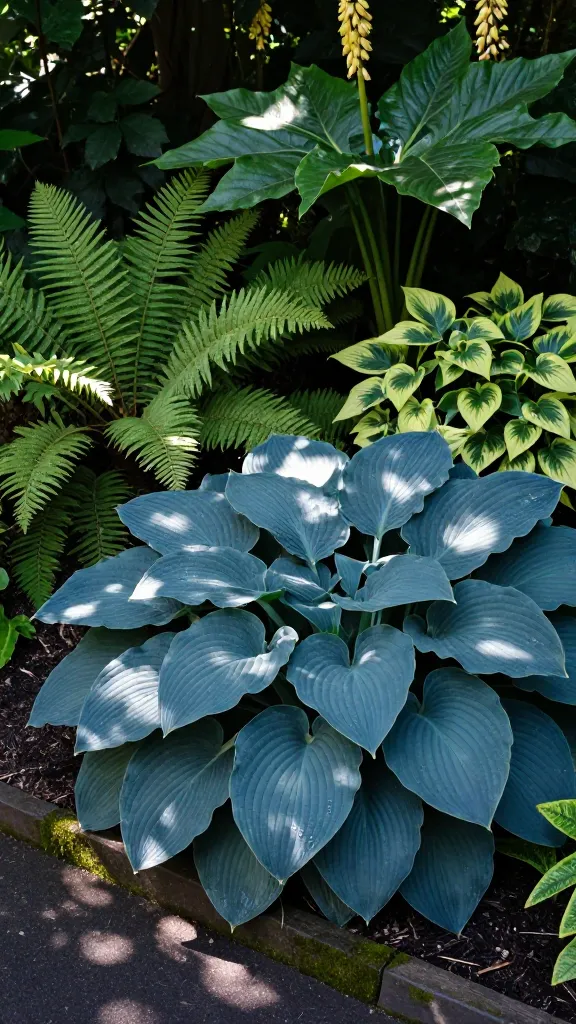
One large, sculptural plant can transform a dull nook. Big leaves catch light and shadows, creating drama even with zero blooms.
Showstoppers to Try:
- Gunnera (in very damp, mild climates)
- Large hostas (blue, chartreuse, variegated—pick your fighter)
- Rodgersia (bronzy, textured foliage)
- Ligularia (huge leaves plus late-summer flowers)
Group in threes for impact or plant one as a focal point. Honestly, a single monster hosta can upstage an entire flower bed—seriously.
Best for: Corners that need a “whoa” moment without tons of plants.
5. Light It Like a Boutique
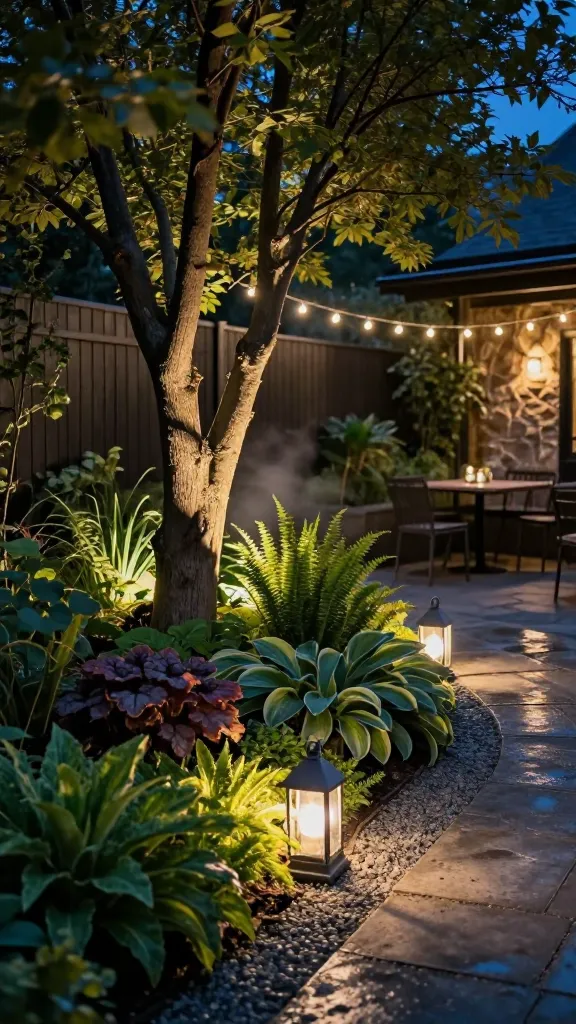
Shade gardens glow at night with the right lighting. Soft, low, and warm beats bright floodlights every time.
Tips:
- Use path lights to graze along edges, not blind you.
- Uplight a tree trunk or sculptural shrub for instant drama.
- String lights or lanterns make small patios feel enchanted.
Solar options work if you’ve got dappled light; otherwise, go low-voltage. You’ll extend your garden’s “wow” factor long after sunset.
Best for: Courtyard corners, side yards, and entertaining zones.
6. Add a Water Feature That Whispers
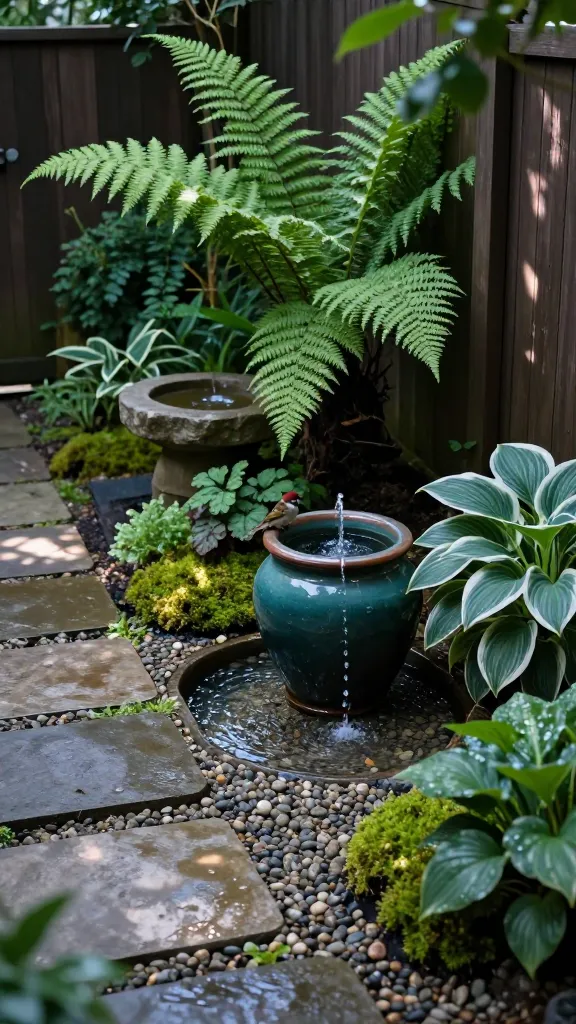
Shade keeps water cooler and reduces algae, which makes it perfect for small fountains or reflecting bowls. The sound masks street noise and chills everyone out.
Great Options:
- Disappearing fountain (recirculating basin hidden under gravel)
- Glazed ceramic urn with a bubbler
- Shallow birdbath tucked beneath ferns
Keep it subtle—soft trickles over splashes. Birds will treat it like a spa, and you’ll gain a calming focal point.
Best for: Narrow side yards and dark patios that need movement and life.
7. Color Pop With Shade-Loving Blooms
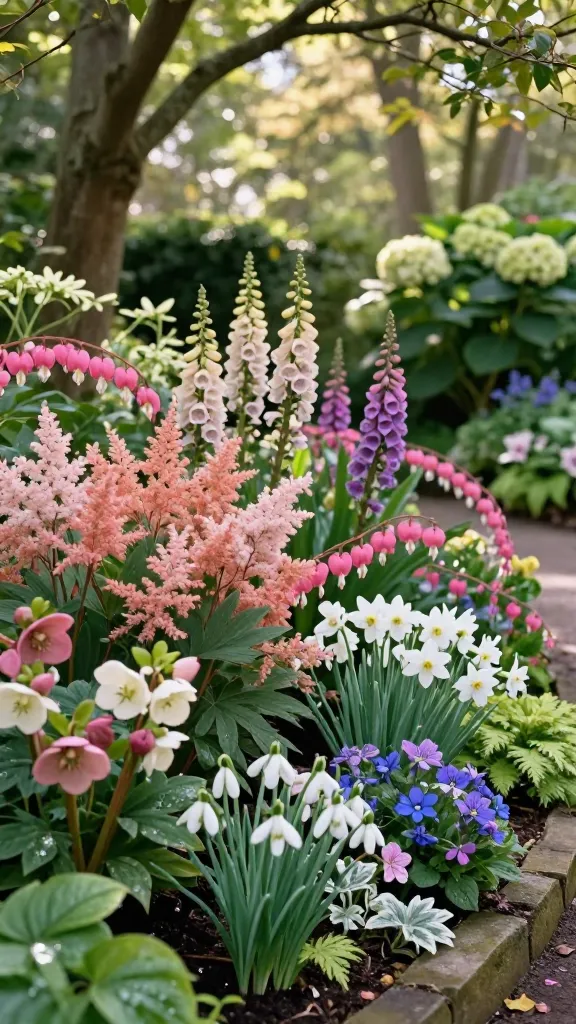
Yes, you can have flowers in shade. You just need the right cast of characters and a smart schedule.
Bloom Calendar:
- Early: Hellebores, spring bulbs (under deciduous trees), pulmonaria
- Mid: Astilbe, bleeding heart, foxglove (dappled)
- Late: Toad lily, Japanese anemone, hydrangea (panicle in part shade)
Cluster blooms in pockets so color lands with intention instead of random sprinkles. FYI, white flowers glow in low light and look luxe.
Best for: Part-shade beds that need seasonal excitement.
8. Carpet the Ground (Weed-Free Fantasy)
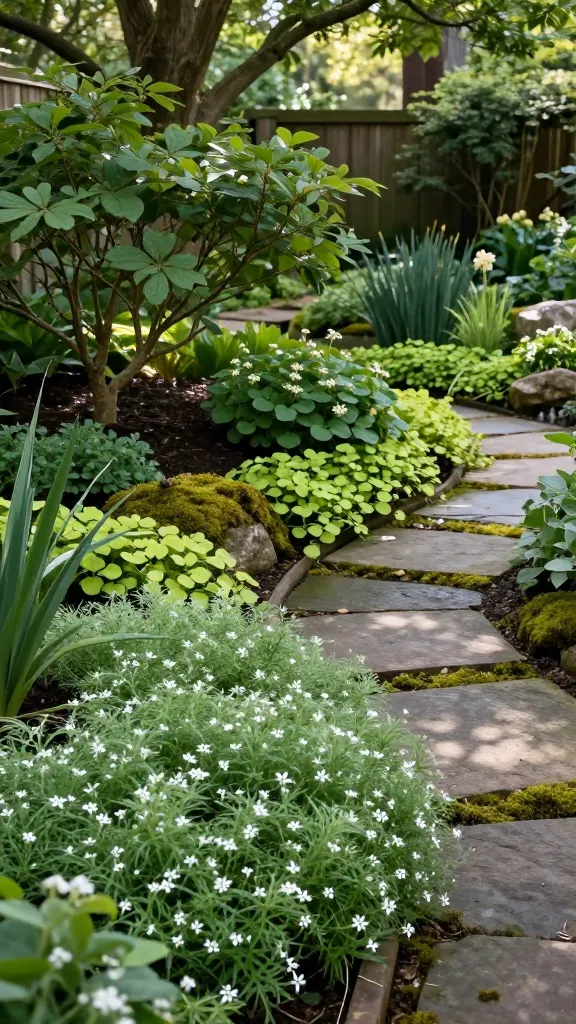
Groundcovers lock in moisture, protect soil, and smother weeds. They also soften paths and make everything look finished.
Reliable Picks:
- Sweet woodruff for a fragrant, airy mat
- Epimedium for dry shade under trees
- Creeping Jenny for chartreuse trails (contain it)
- Moss where it naturally wants to grow—don’t fight it
Weave groundcovers around stepping stones and under shrubs for instant cohesion. Less mulch, more green—IMO, that’s a win.
Best for: Any space bare soil keeps photobombing.
9. Create a Cozy Nook With Shade-Friendly Seating
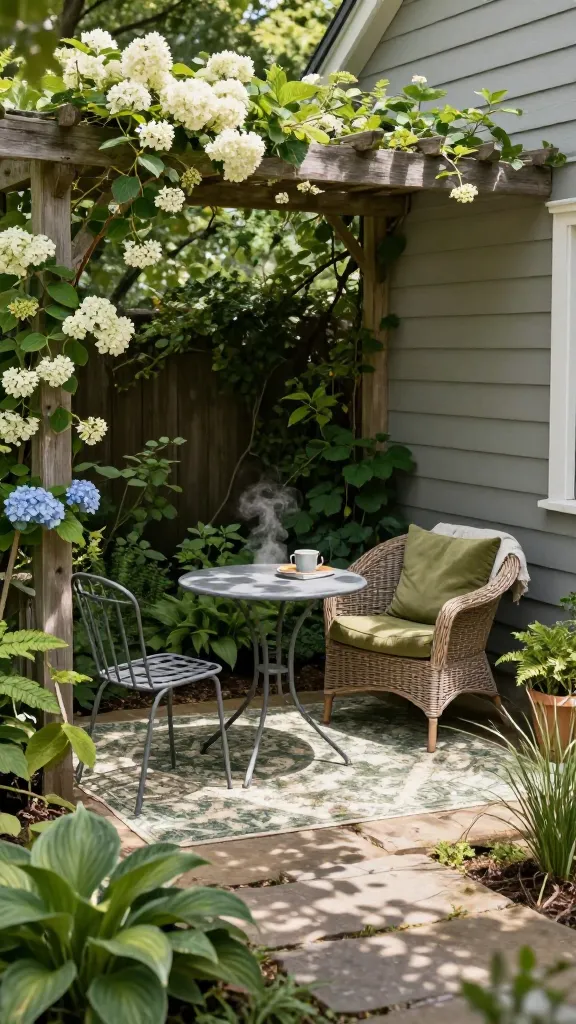
Give yourself a reason to hang out there. A tiny bistro set, a weatherproof armchair, or even a hammock turns shade into a retreat.
Smart Add-Ons:
- Small side table for a mug or book
- Outdoor cushion in mildew-resistant fabric
- Throw a patterned outdoor rug to define the zone
Tuck seating under a small tree or pergola draped with vines like climbing hydrangea. You’ll use the space way more than you think—trust me.
Best for: Corners near the house or tucked at the end of a path.
10. Use Mirrors and Light Surfaces to Brighten
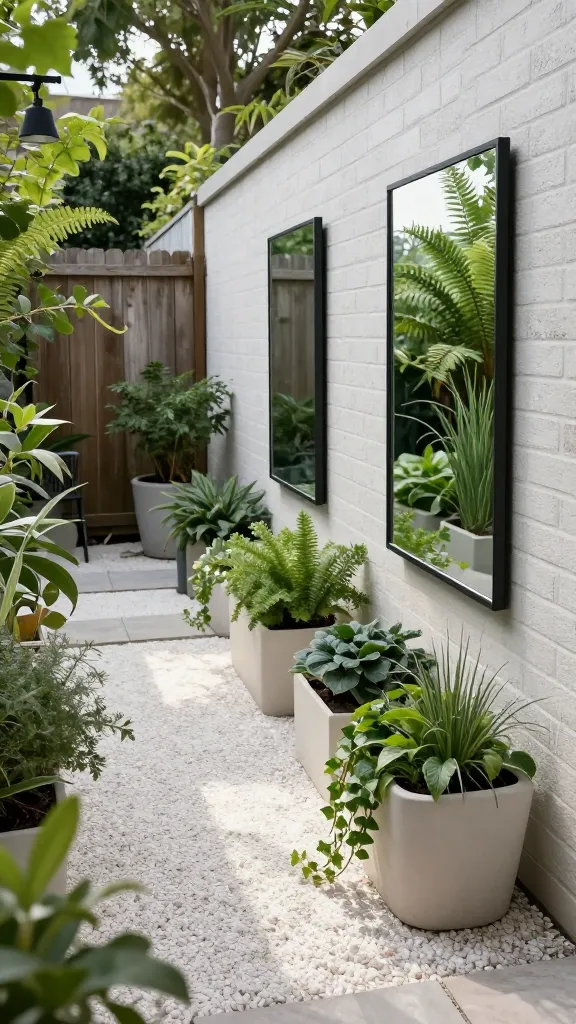
Borrow light with reflective tricks. Mirrors, pale gravel, and light-colored planters bounce ambient brightness into dim corners.
How To Not Make It Weird:
- Use outdoor-safe mirrors in simple frames—no funhouse vibes.
- Angle mirrors to reflect plants, not your face mid-gardening (you’re welcome).
- Choose light pavers or crushed marble to lift the palette.
These tweaks make shade feel intentional and airy. Low effort, surprisingly big payoff.
Best for: Narrow side yards, alleyways, and enclosed courtyards.
11. Embrace Texture With Bark, Ferns, and Grasses
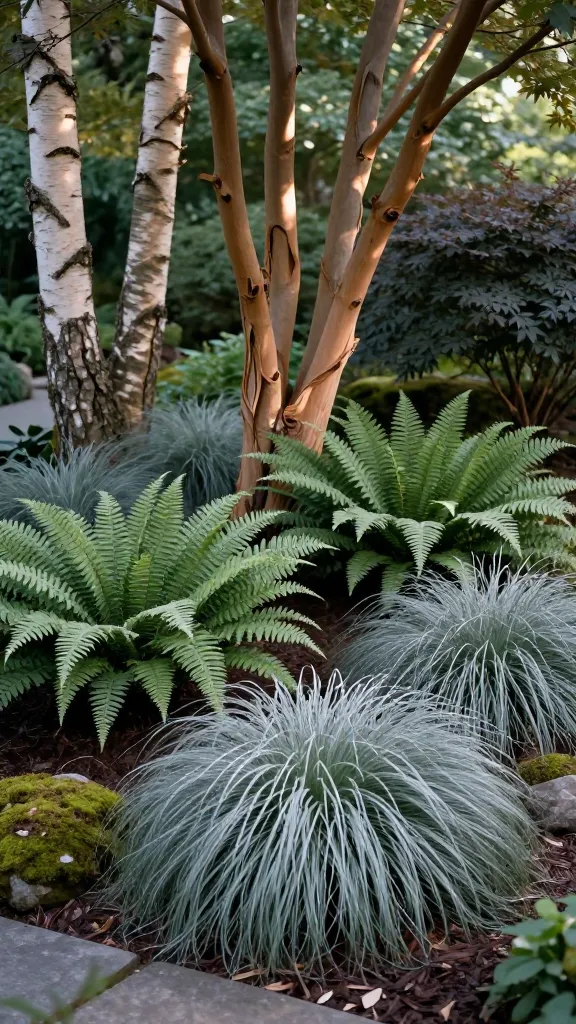
Texture creates interest when color runs low. Mix feathery fronds, glossy leaves, and papery bark to keep your eye moving.
Texture All-Stars:
- Ferns: lady, autumn, Japanese painted
- Bark: paperbark maple, river birch (part shade), ninebark
- Grasses: Hakonechloa, carex (sedges) for that gentle sway
Repeat textures in a rhythm—ferns in threes, sedges in drifts—to keep it cohesive. Your shade garden will feel layered and luxe year-round.
Best for: Calm, serene designs where you want elegance over chaos.
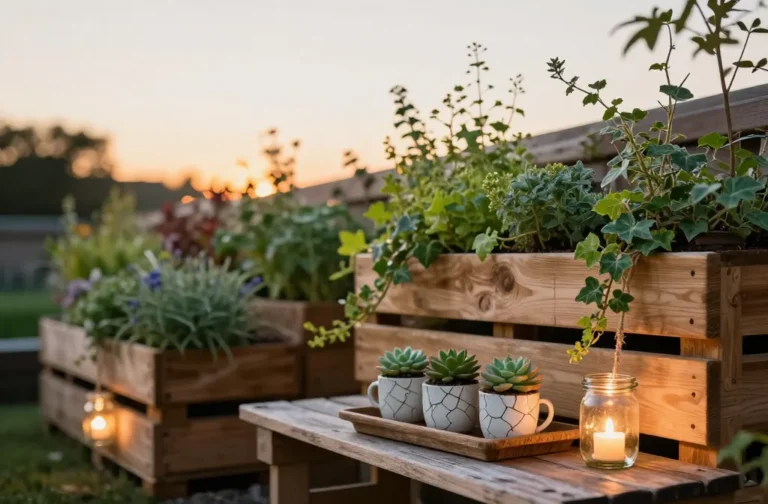
12. Design a Shade-Loving Container Cluster
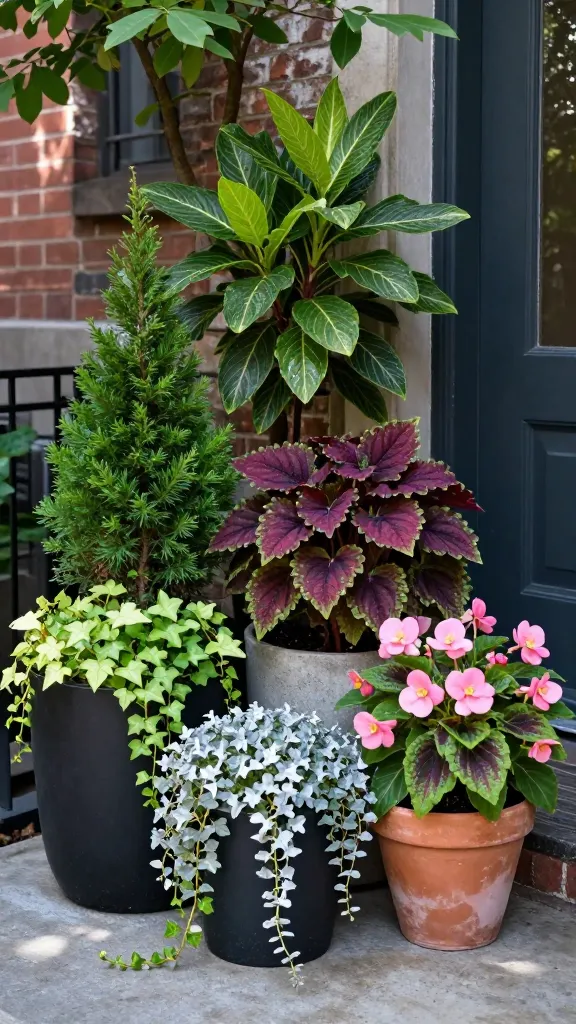
Containers let you test plants, add height, and cheat great soil where your ground soil stinks. Group pots for a mini shade oasis on patios or stoops.
Winning Recipes:
- Thriller: dwarf conifer or fatsia
- Filler: heuchera, coleus (shade types), begonias
- Spiller: ivy, creeping Jenny, dichondra ‘Silver Falls’
Use varying pot sizes and finishes—matte black, textured concrete, aged terracotta—for a curated look. Rotate seasonally and boom: instant refresh without replanting the whole bed.
Best for: Renters, balconies, and awkward corners that need height and color.
Feeling inspired yet? Shade doesn’t limit you—it gives you permission to go lush, moody, and wildly textural. Start with one corner, layer in a path or a bold plant, and let the magic build. Your dark spot’s about to become the most interesting part of your garden.